ClawExperts Website
- Objective
- Keep the website in step with the product across three stages, from TryOpenClaw.io to the ClawExperts AI agent platform, speaking to each new reader within the first few seconds
- Role
- Web Design & Art Direction
- Responsibilities
- Three website versions designed in Figma · HTML/CSS build (vibe-coded) · Copy & content contribution · Five to six revision rounds on the August 2026 version · Responsive
- Team
- In-house, working closely with Growth, Product and Engineering
Stage 1 · TryOpenClaw.io
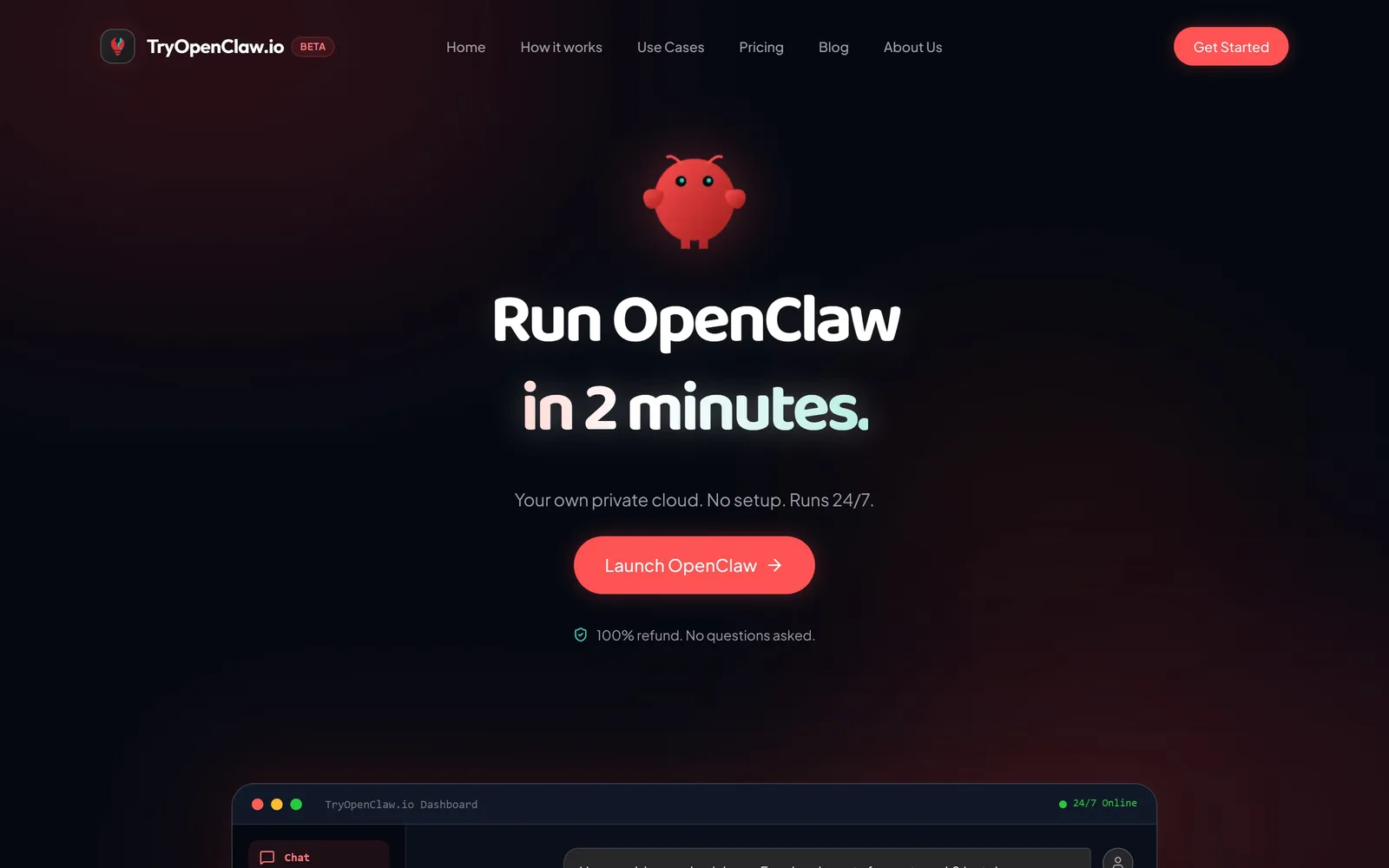
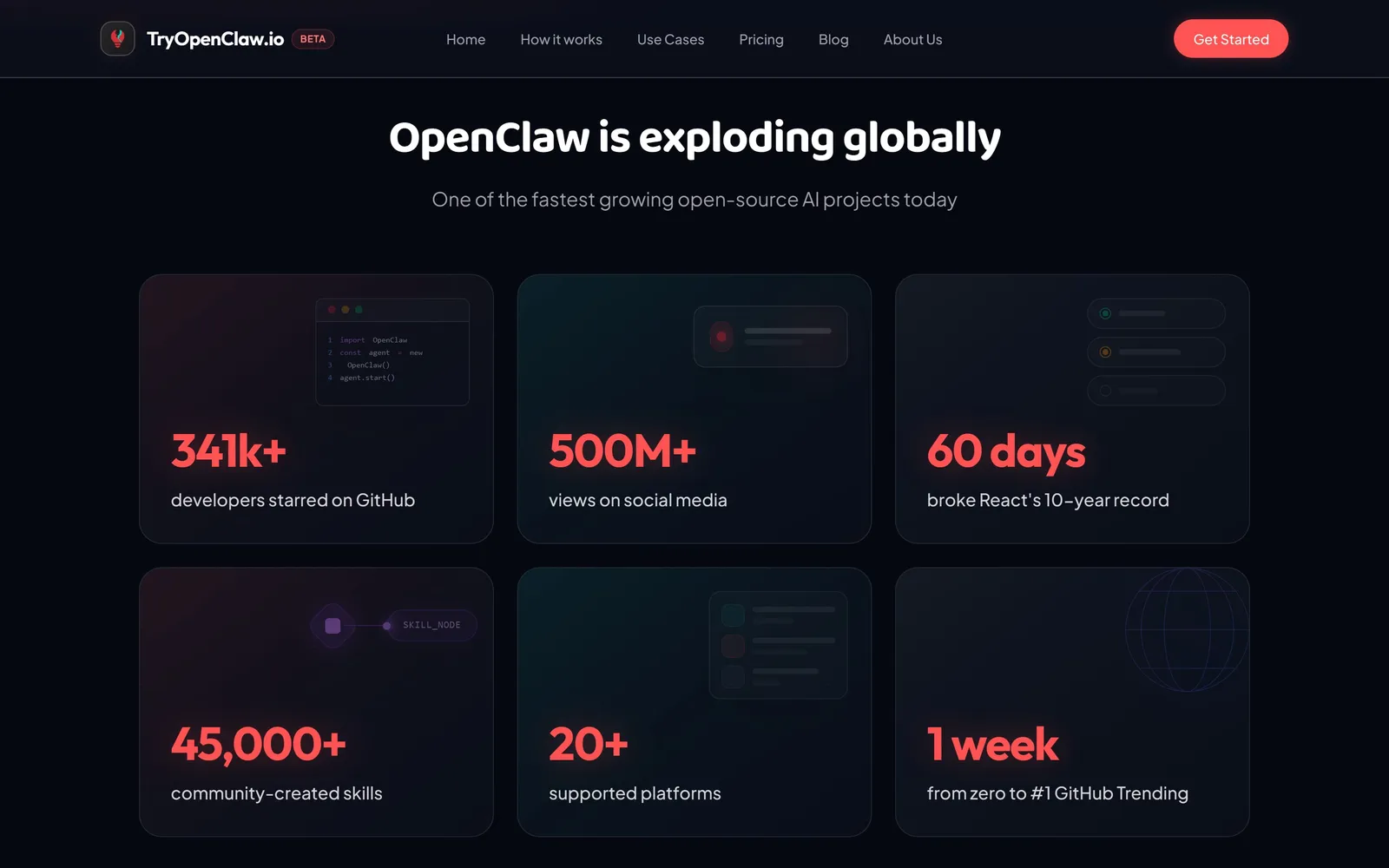
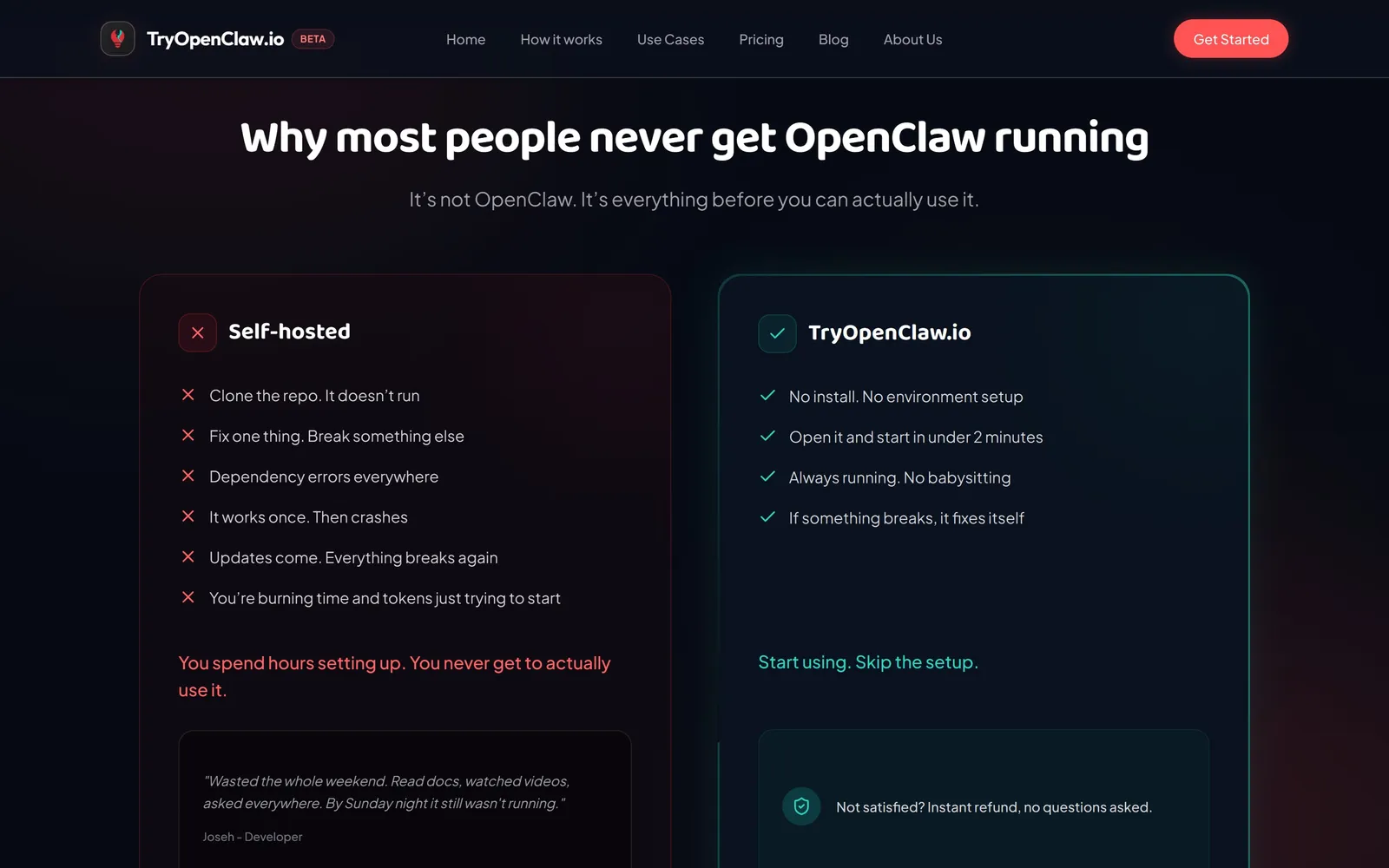
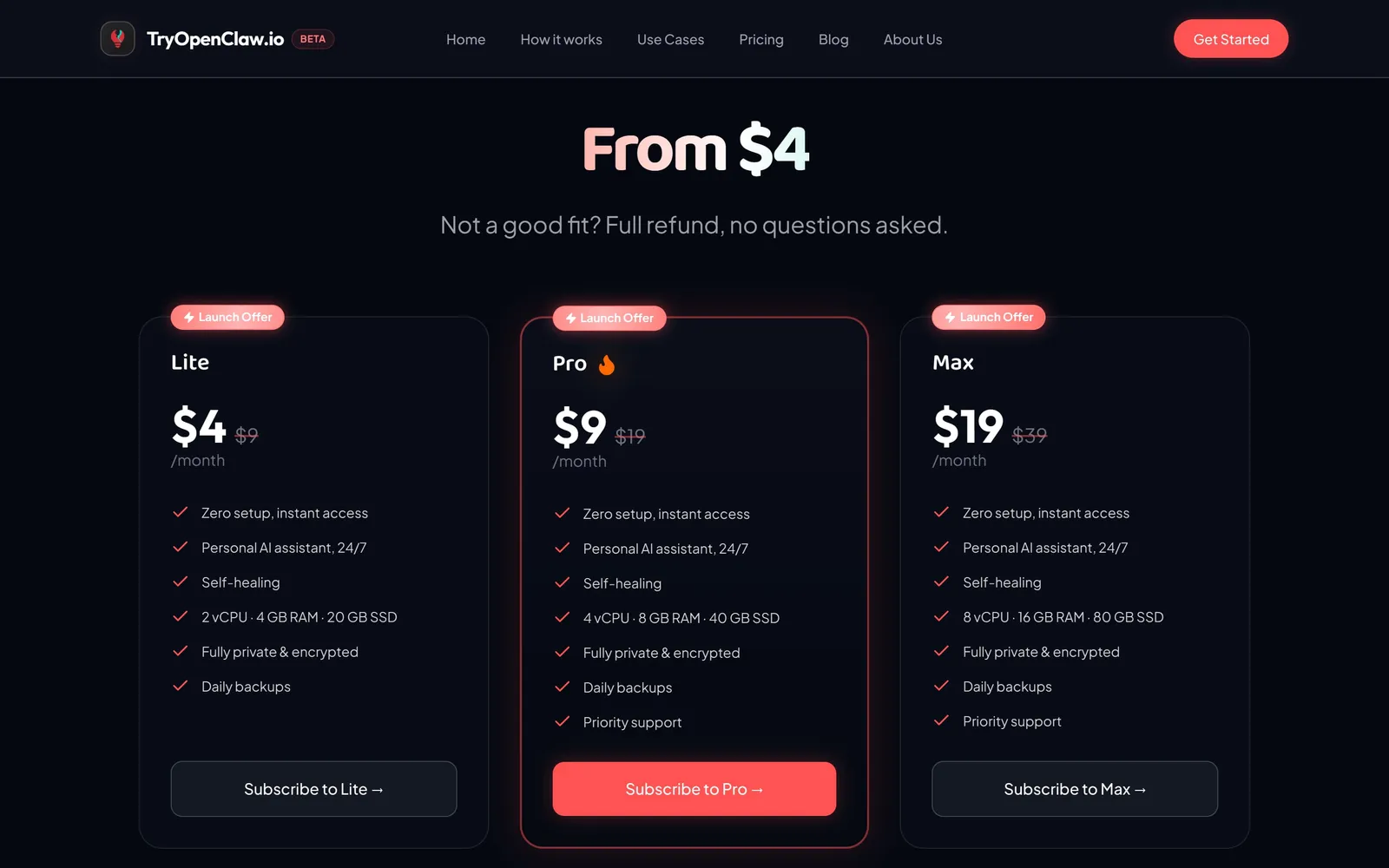
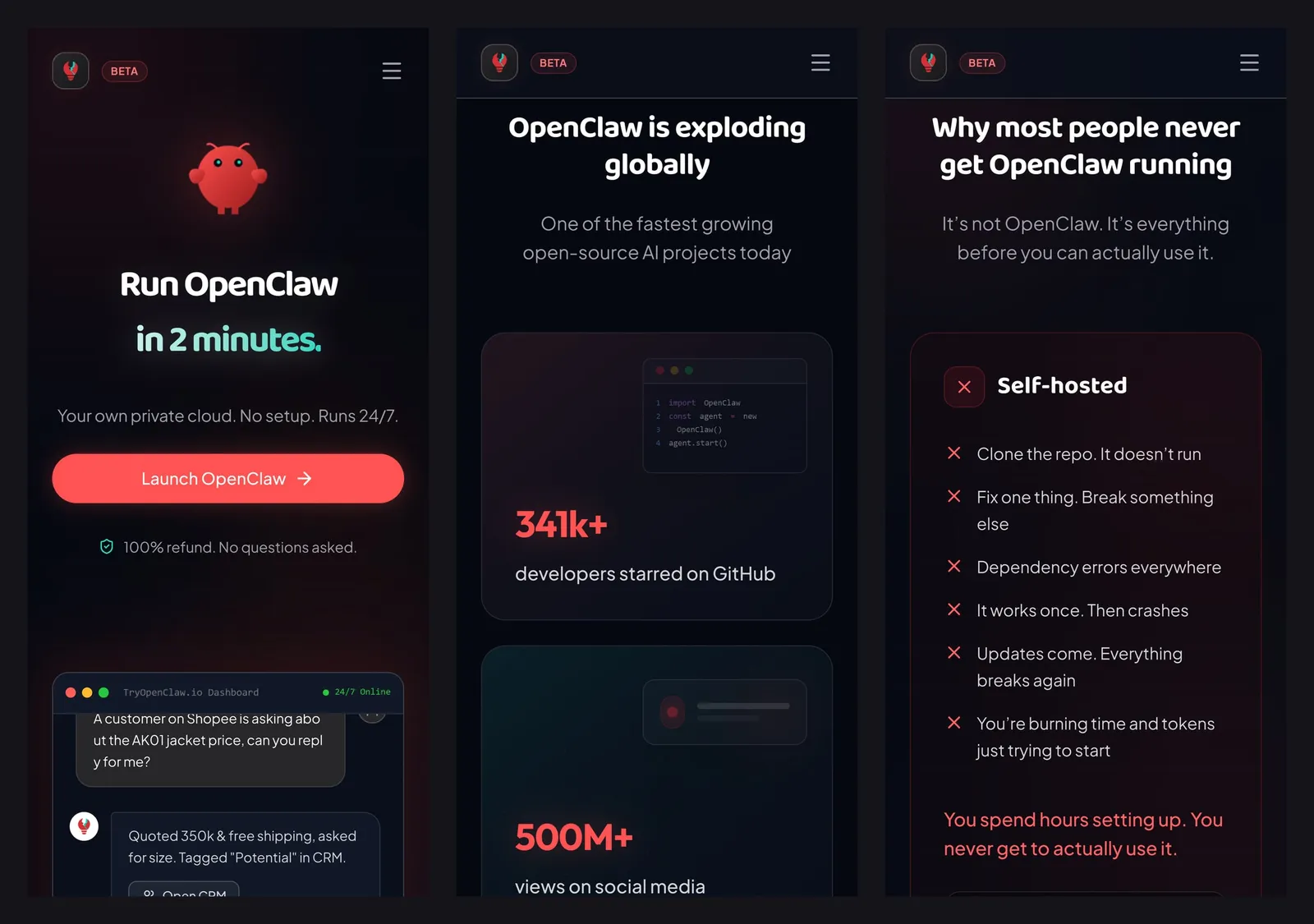
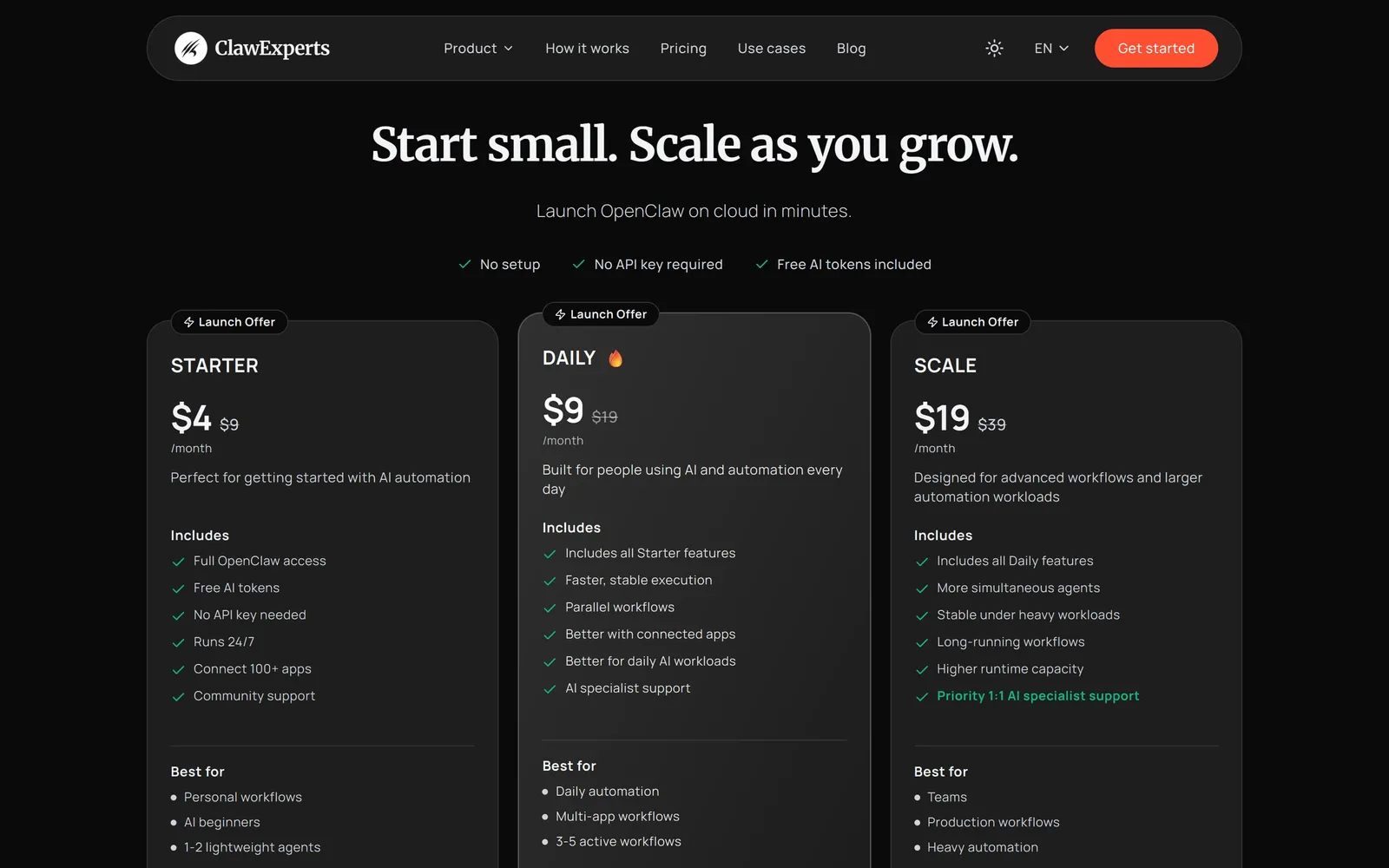
The first website was called TryOpenClaw.io, launched right as OpenClaw took off globally. Its readers were curious about OpenClaw but stuck at installing it themselves, so the page went straight to one promise, “Run OpenClaw in 2 minutes”, on a dark ground with the lobster mascot in the hero. The sections that follow use OpenClaw’s growth figures, a self-hosted versus ready-to-use comparison and pricing from $4 to move readers from curiosity to a first try.
Stage 2 · ClawExperts 3.1
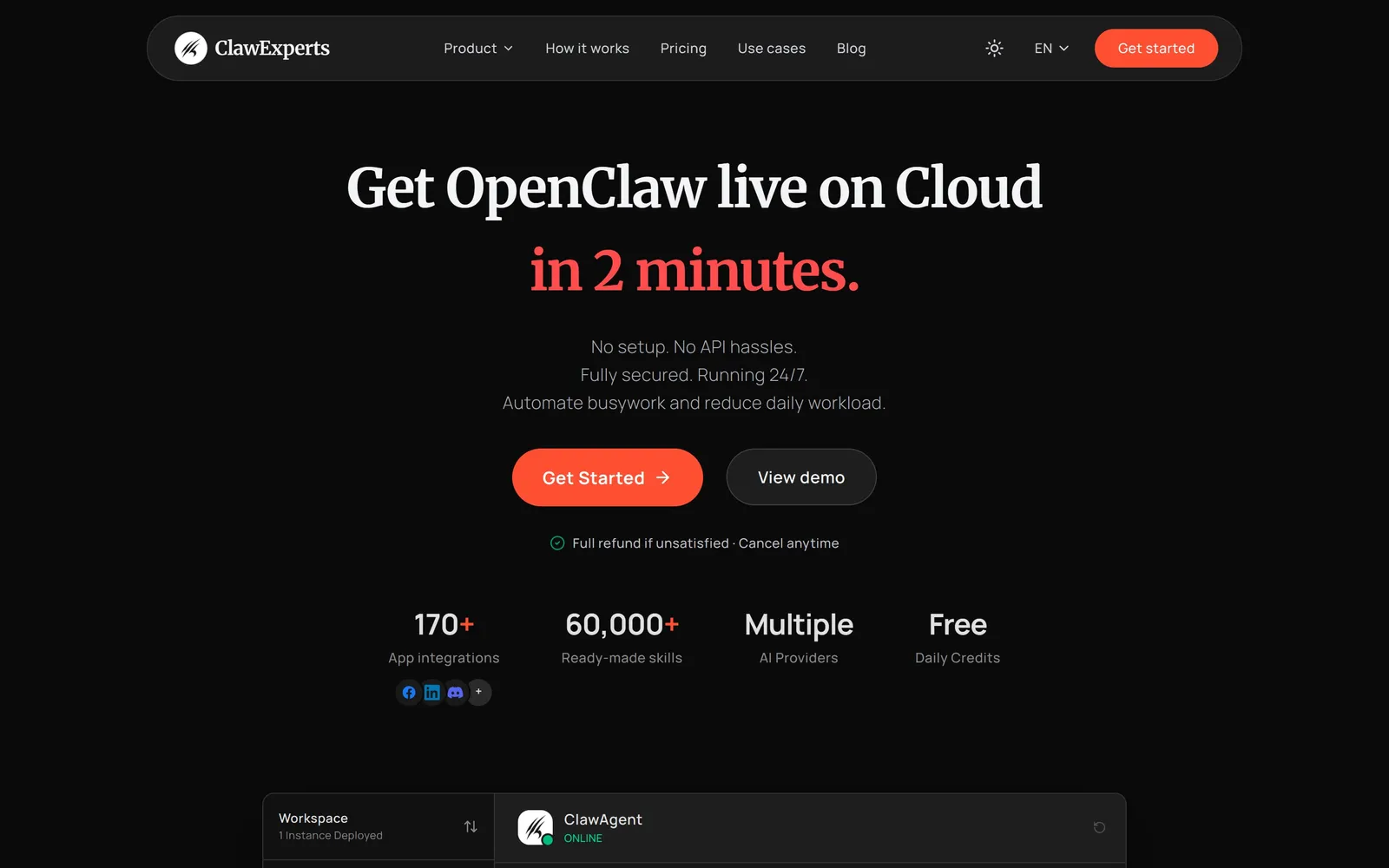
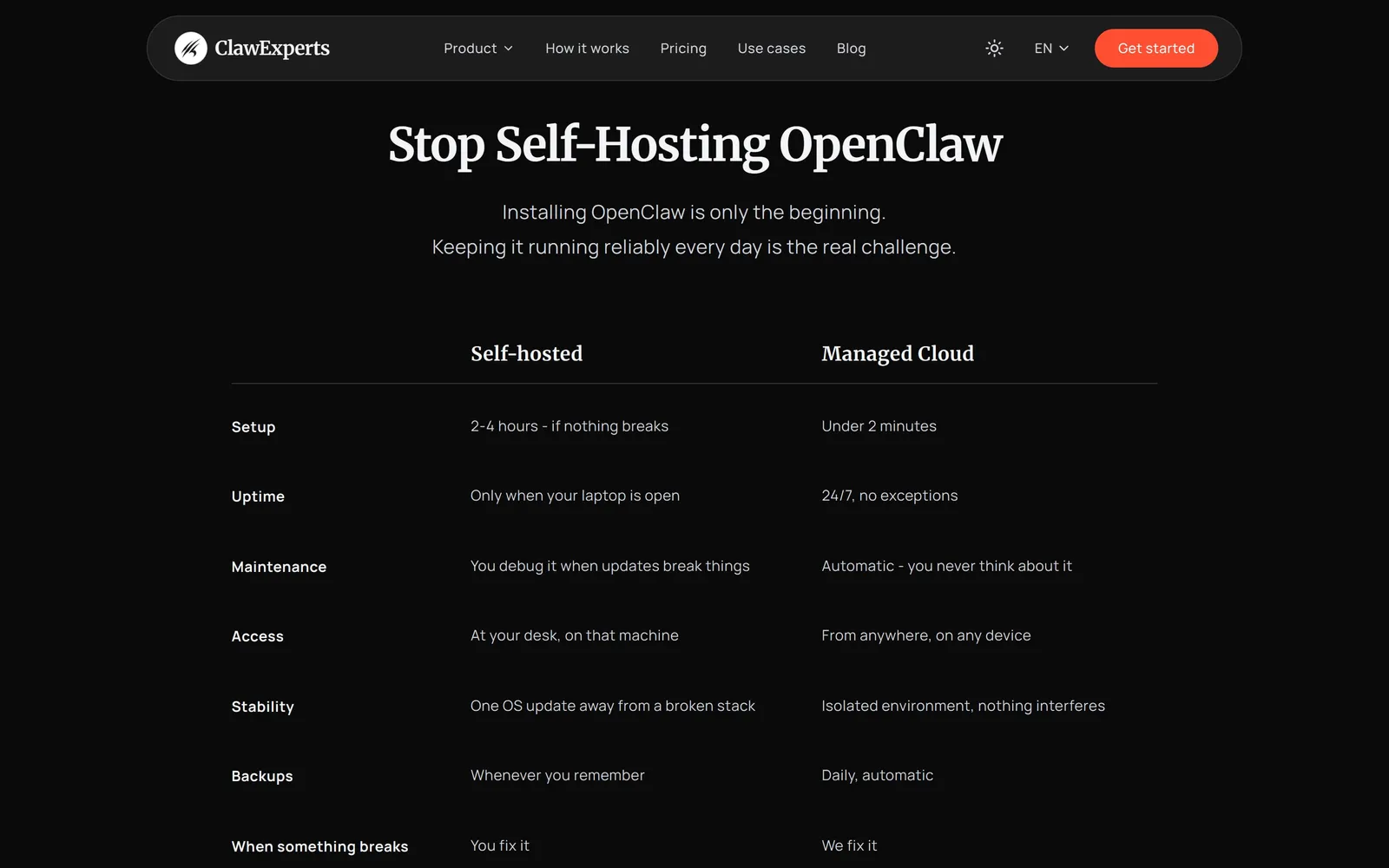
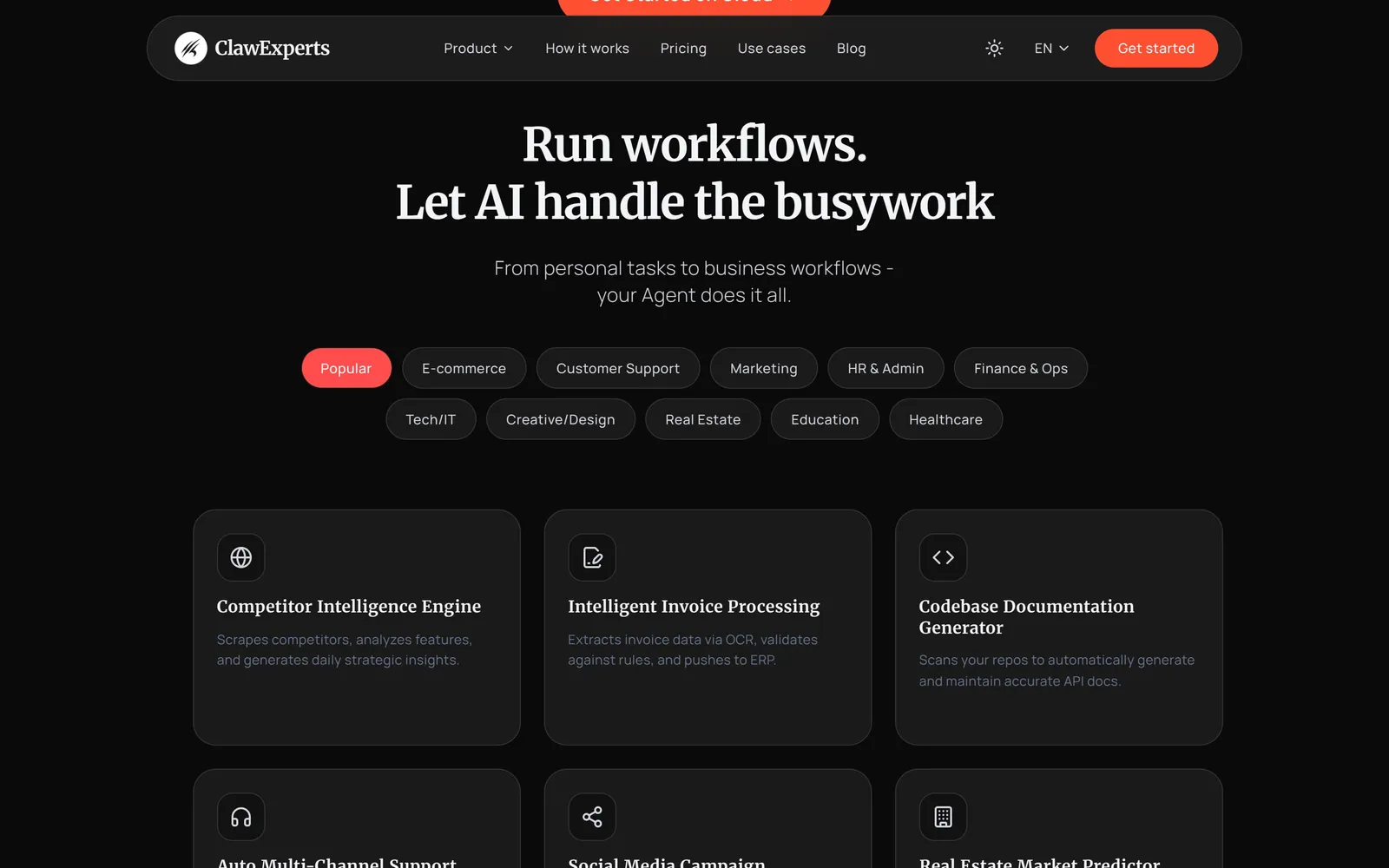
When the product was rebranded as ClawExperts, its core was still OpenClaw running in the cloud, but the website shifted its voice from tech enthusiasts to people with work to get done. Serif headlines replaced TryOpenClaw’s rounded type, a Self-hosted versus Managed Cloud table answered the reliability question, and a library of workflows by industry showed readers concrete tasks they could hand to AI, rather than only infrastructure.
Stage 3 · ClawExperts, August 2026
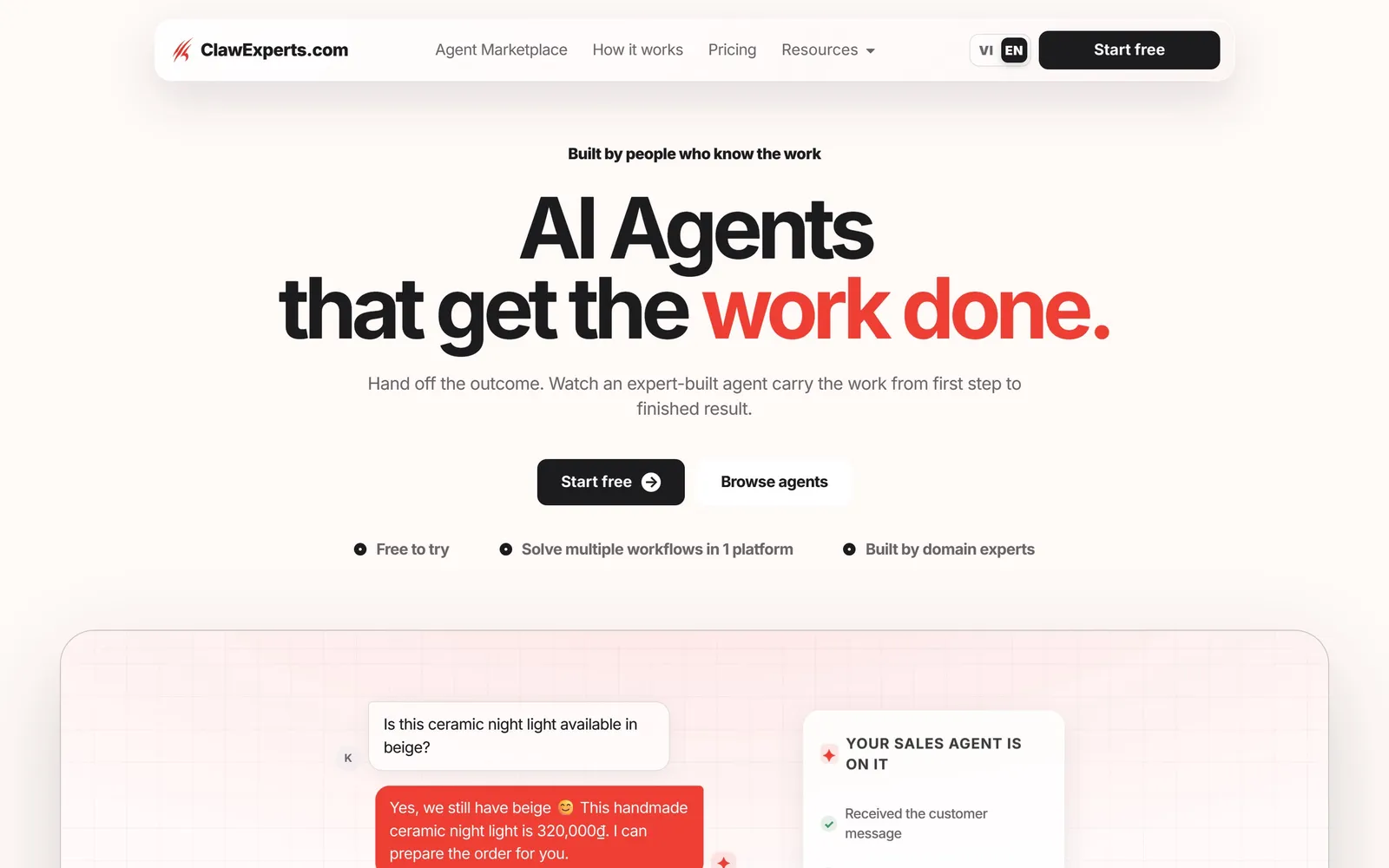
When the product shifted into a platform of expert-built AI agents, the reader changed too: no longer someone who wanted to run OpenClaw, but a business owner who wanted to hand off part of the work entirely. I rebuilt the website around a single promise, “AI Agents that get the work done”, and let each section after it answer one worry of the person handing work off: what the agent can do, who stands behind it, how to start, and what it costs. The “Built by people who have done the work” section puts the experts’ faces and words in the middle of the page, in place of the infrastructure tables of earlier versions.
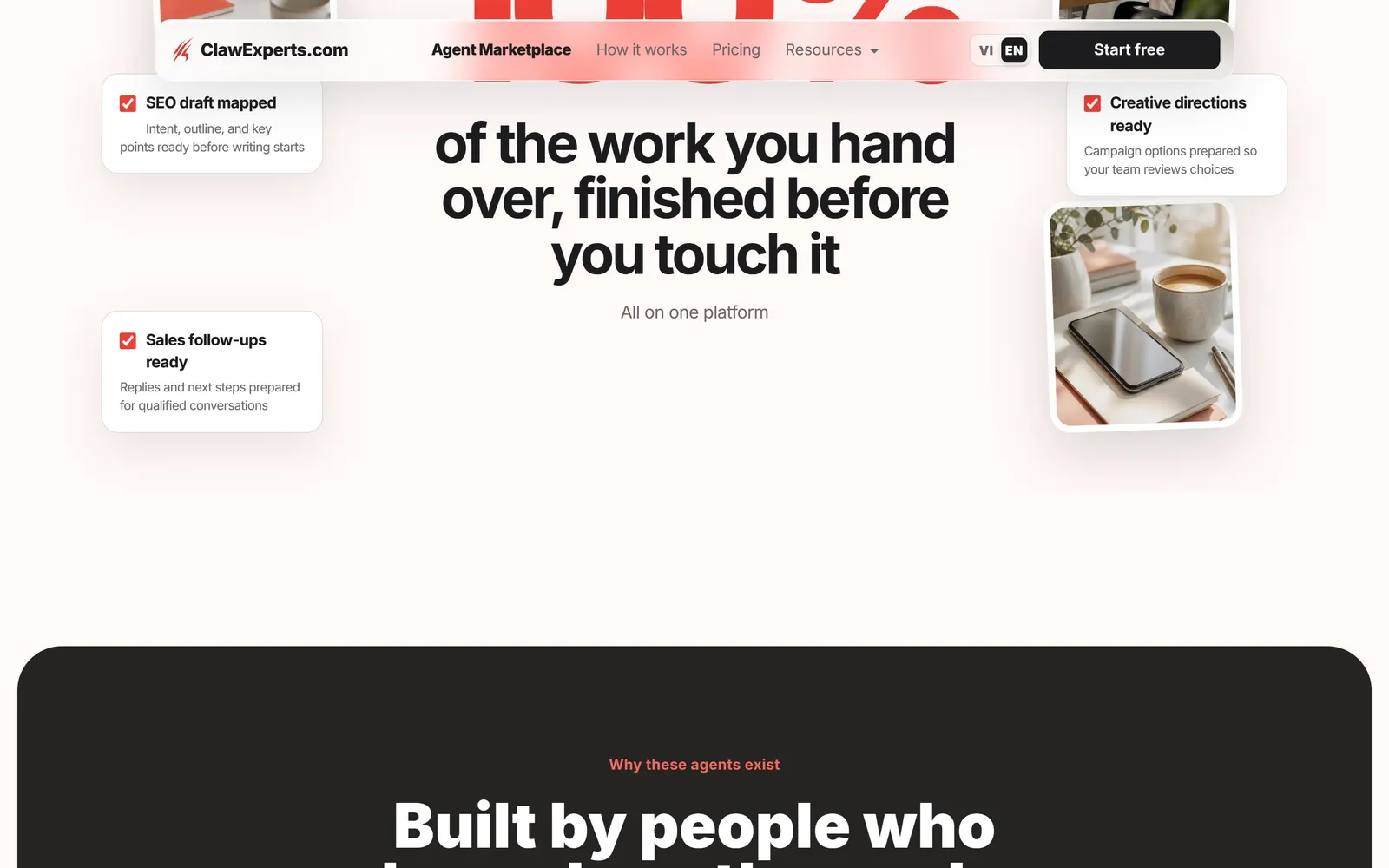
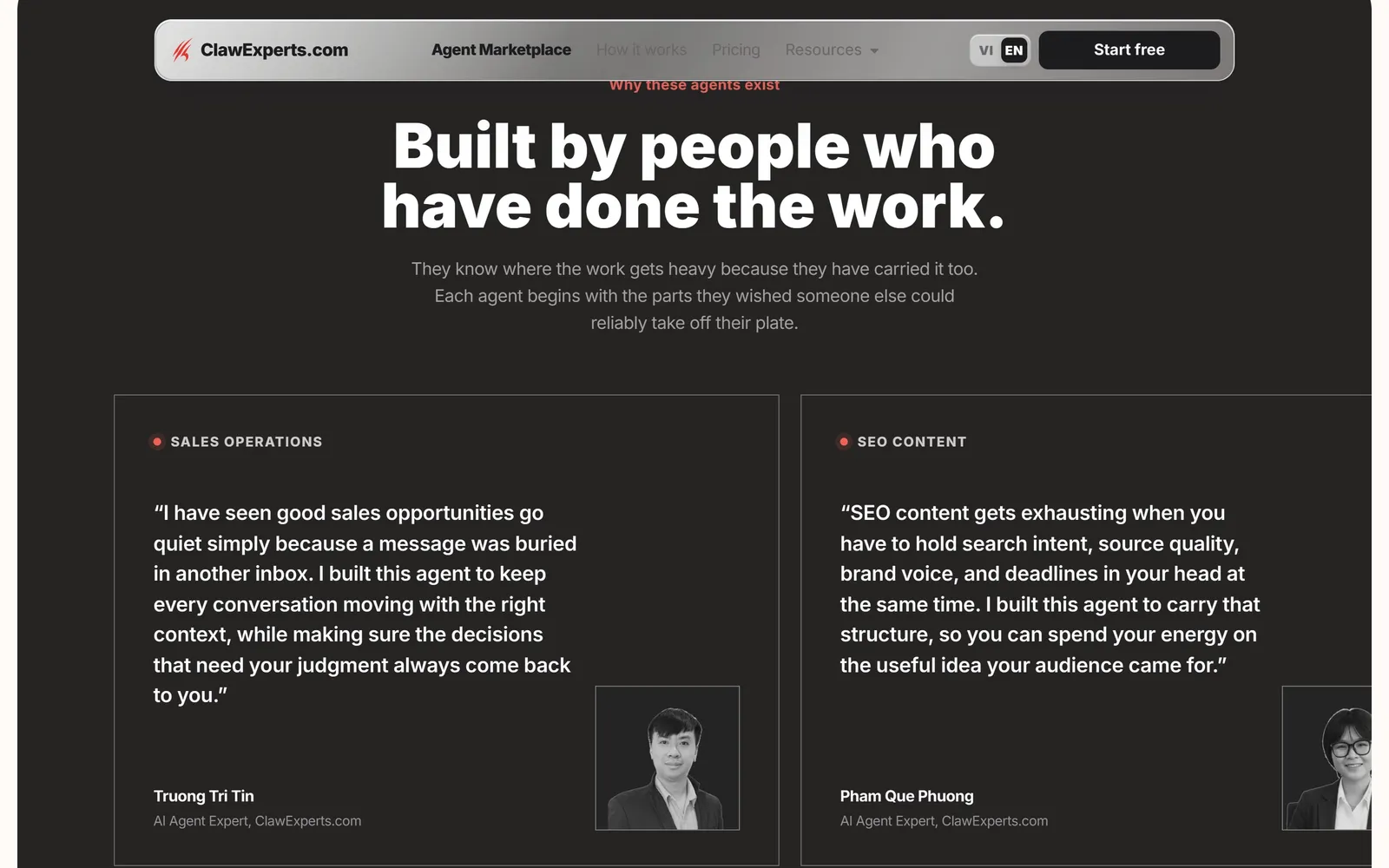
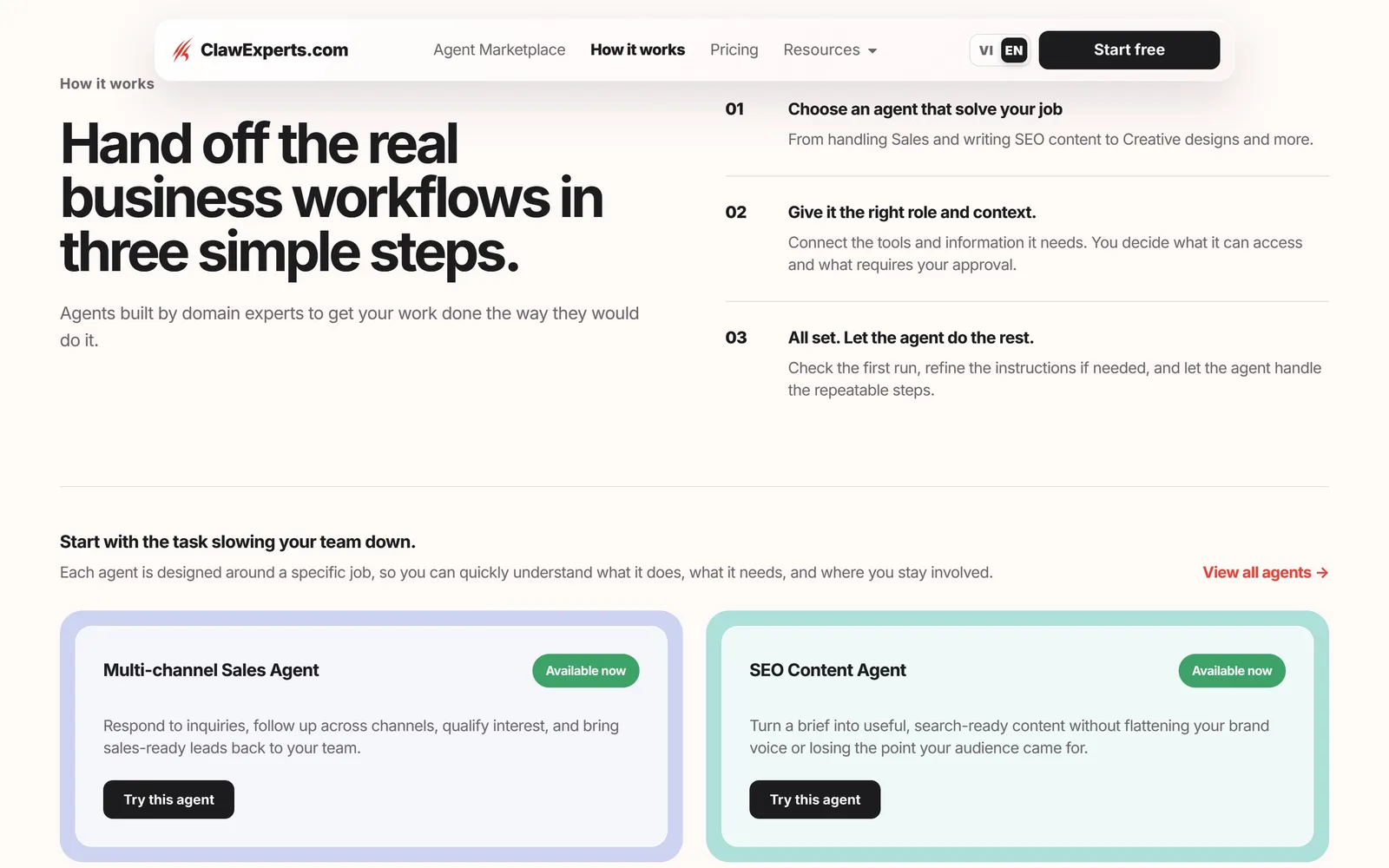
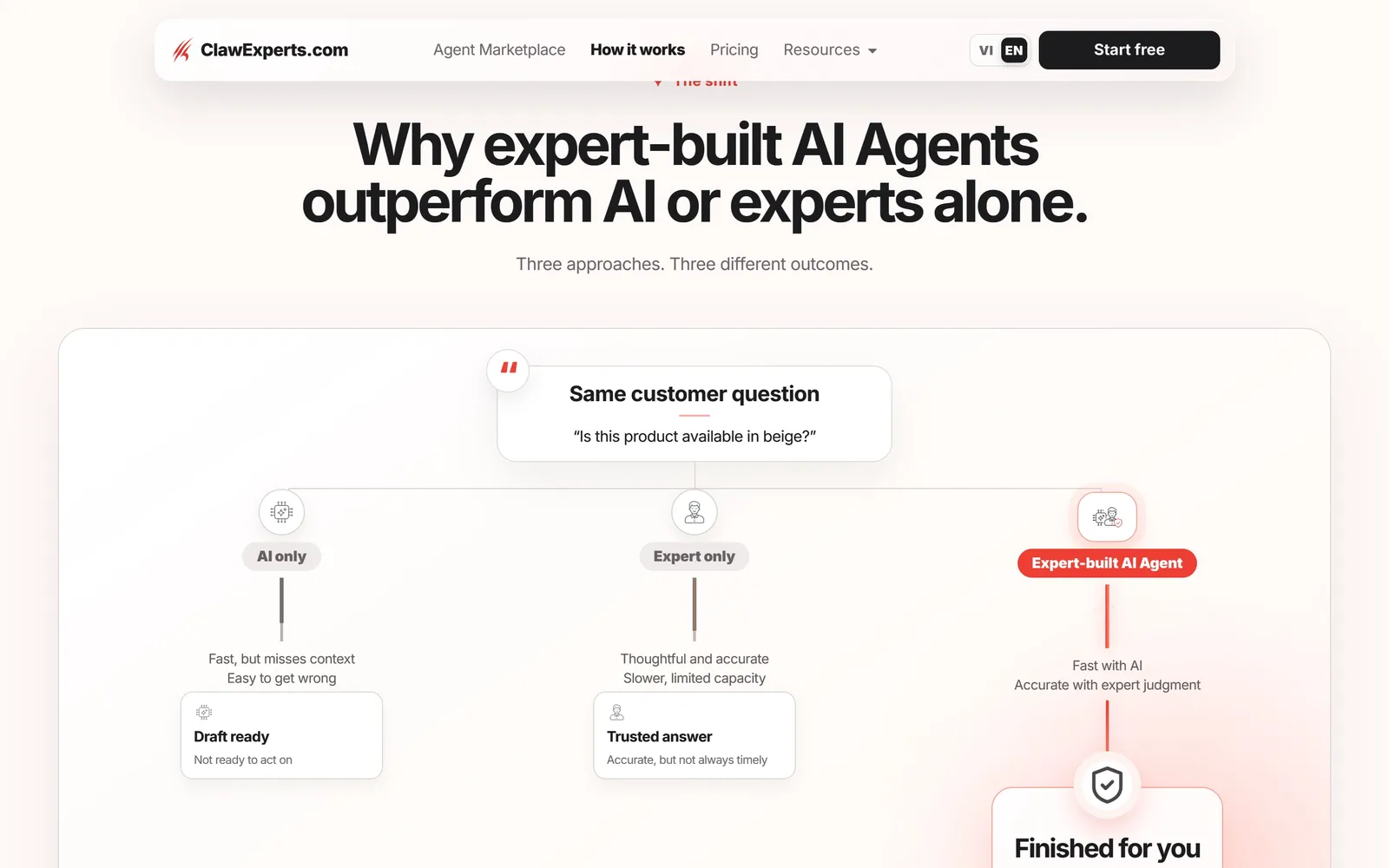
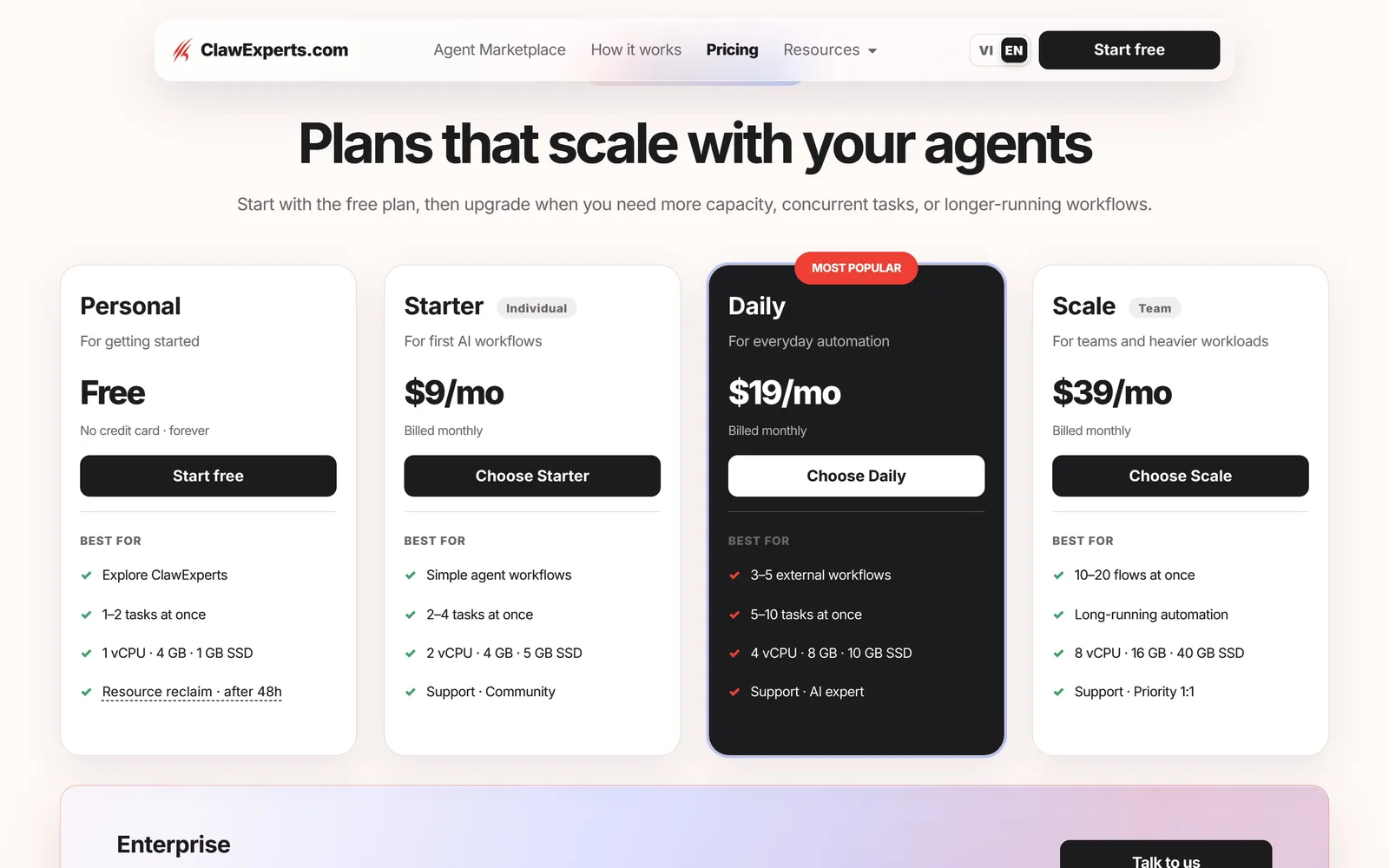
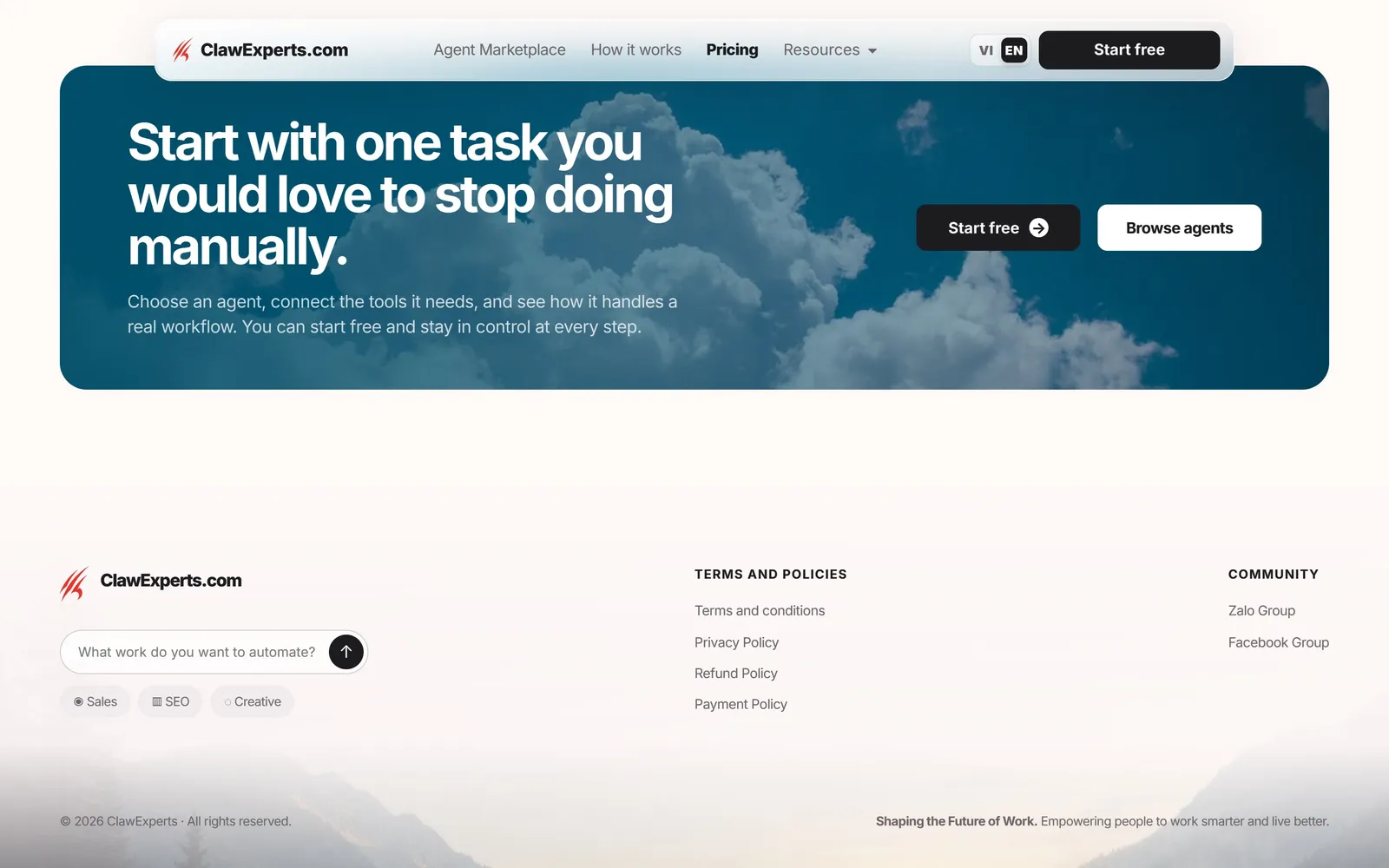
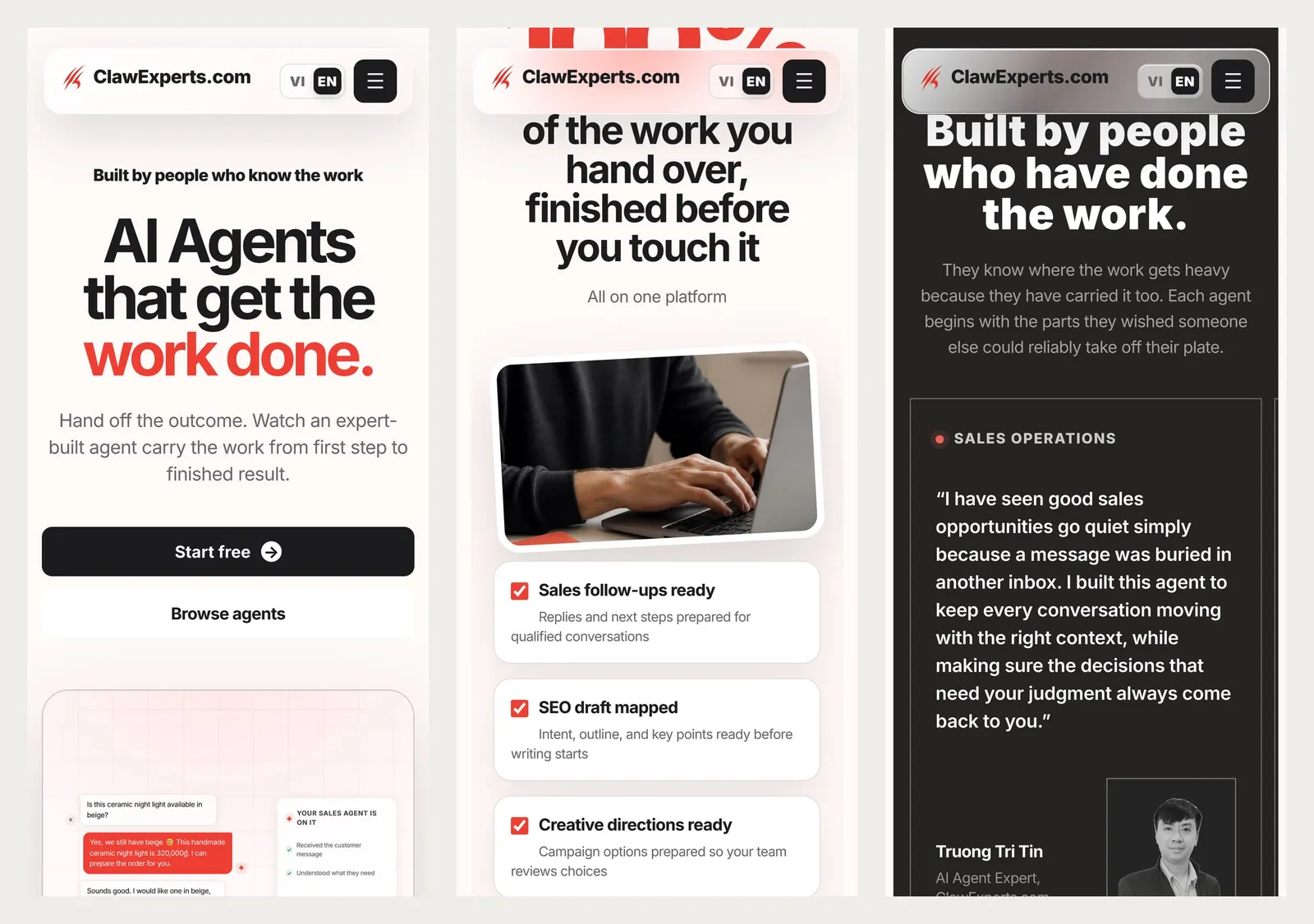
Each version was designed in Figma and then built directly in HTML/CSS with AI assistance, so every revision round could be checked in the browser instead of stopping at the mockup. The August 2026 version alone went through five to six rounds, with Claw red reserved for the core promise and calls to action. Across three stages, the website moved from “run OpenClaw fast” to “hand the work to an agent”, in step with how the product changed.