Seven Hours with MoMA
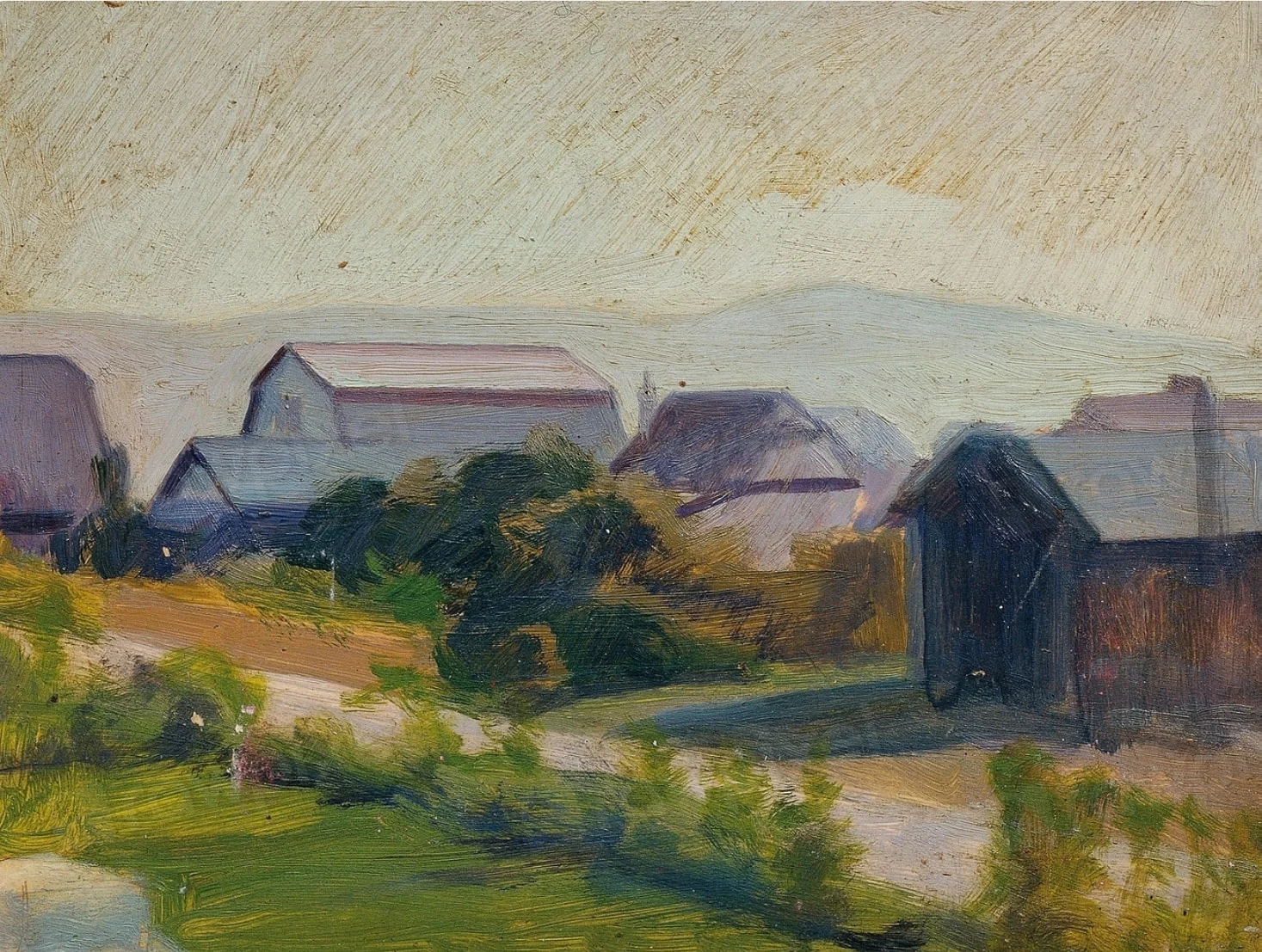
Cover: Hütteldorf (1922) by Josefine Wawra.
Sometimes learning more about art is not about understanding more, but realising how many ways there are to look at something familiar.
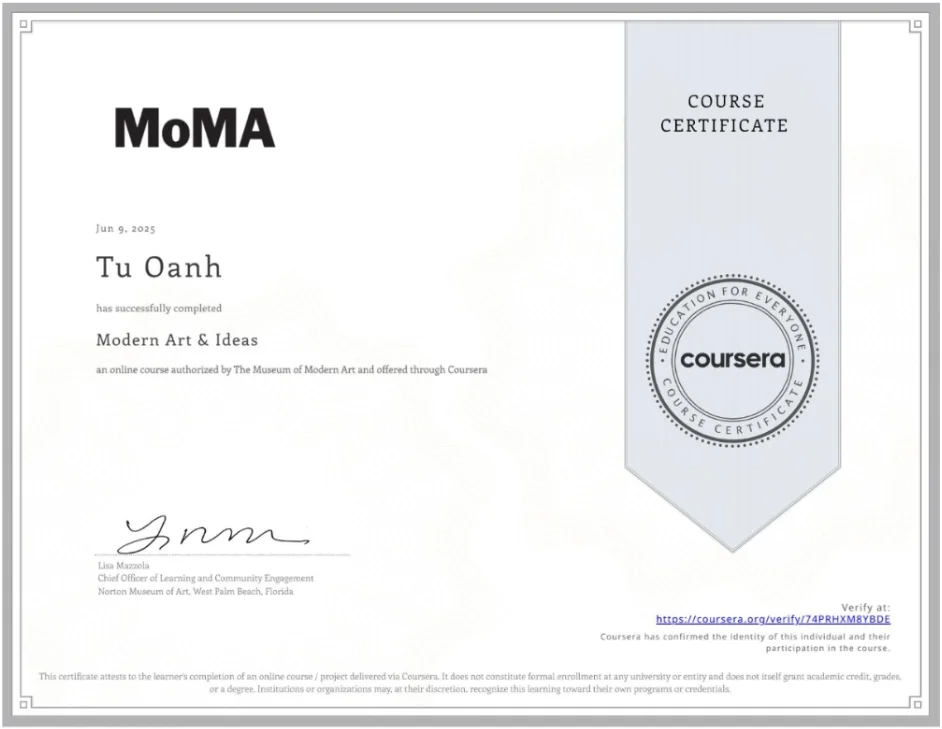
In June 2025, I completed Modern Art & Ideas, a seven-hour online course by The Museum of Modern Art (MoMA) on Coursera.
Seven hours is hardly enough to understand modern art. And the course does not really attempt to do that.
Rather than moving through movements and historical timelines, MoMA brings art closer to everyday life through themes such as place, identity, ordinary objects, and the relationship between art and society.
I liked this approach. A painting becomes more than the name of its artist or the period in which it was made. It invites simpler questions: What did the artist see? Why did they choose to keep certain things and leave others out? What makes something familiar become art?
A few things from the course made me reconsider some of my own small habits when I draw.
A place is more than a landscape
In Places & Spaces, Claude Monet's Water Lilies appears alongside very different works, including Zarina's Home is a Foreign Place and a New York street corner painted by Martin Wong.
They approach place in different ways, but suggest something similar: a place in art is not always just somewhere we can find on a map.
It can be a memory, a sense of belonging, or sometimes the feeling of not belonging anywhere at all.
I often paint landscapes in watercolor. A stretch of sky, a few trees, the last warmth of an afternoon. Most of these paintings have no particular story behind them. Sometimes I simply like the color of the light and want to keep it somewhere on paper.
I used to think of this as a small hobby, a quiet way to spend time with myself.
After the course, I began to see it a little differently.
Perhaps when I paint a landscape, I am not really trying to remember what a place looked like. Sometimes I am only trying to remember how I saw it at that particular moment.
When the material becomes part of the picture
Another part I enjoyed was Transforming Everyday Objects.
Ruth Asawa used a laundry stamp from Black Mountain College to create repeating patterns on fabric. Tomáš Gabzdil Libertíny brought the natural work of bees into the making of a honeycomb vase.
Materials and processes that seem far removed from painting can become ways of making art in their own right.
It made me think of my yellow kraft-paper sketchbook.
I like the feeling of a fine pen moving across slightly rough paper, the contrast of black ink against the warm yellow surface, and the spaces deliberately left untouched.
That yellow is not something I add to the drawing. It was already there, quietly becoming part of every picture.
Sometimes the paper itself helps me decide where to place a line, how much to draw, and when to stop.
Little by little, the blank pages of a thick sketchbook grow fewer. In their place are small drawings, some finished, others still incomplete.
I think I like both.
A material does not always need the artist to give it a voice.
Sometimes it already has something to say.
A room painted in red
In Art & Identity, one painting stayed with me: Henri Matisse's The Red Studio.
Almost the entire room is covered in red. Furniture and architectural details remain as thin outlines, while the paintings on the walls keep their own colors.
As a designer, I am used to working with color to organize information, guide the eye, or create consistency across a visual system.
But here, red seems to be doing something else.
It is not simply describing the room.
It allows us to see the space through Matisse's choices: what remains, what recedes, and what he wants us to notice.
Perhaps that is one of the things I find most interesting when art and design sit beside each other.
In design, color often needs a clear reason. It serves identity, structure, communication, and function.
In painting, sometimes a color can simply exist because the painter feels it belongs there.
And perhaps that is reason enough.
Learning to look a little more slowly
Seven hours with MoMA did not change how I work overnight.
There are still designs to finish, details to revise, and decisions to make quickly. Work sometimes makes me look at an image as something that needs to be solved.
But when I return to painting, I do not always want to look that way.
I want to spend a little longer with a work, notice the brushstrokes, the spaces between colors, or wonder why a small detail makes me stop.
I do not necessarily need to understand it right away.
And I do not always need an explanation.
The course reminded me that looking is something we learn, too. Perhaps the longer I work with images, the more I need to make time to learn how to look without rushing.
Seven hours is not much.
But it was enough to make me want to open my sketchbook again, turn through the pages already filled, and spend a little more time with the next one.